


6 July 2026
First published by WorldSkillsUk.
The UK labour market is not in crisis, but it is not thriving either.
According to the latest Labour Market LIVE briefing from the Learning and Work Institute, employment is largely flat, vacancies are falling, and competition for jobs is increasing. There are now 5.5 applicants per vacancy, and sectors like retail and hospitality are undergoing a significant transition in response to changing economic conditions.
This matters because in a labour market defined by stability rather than strong growth, opportunity does not disappear. It becomes harder to access. And that is where adult education becomes essential.
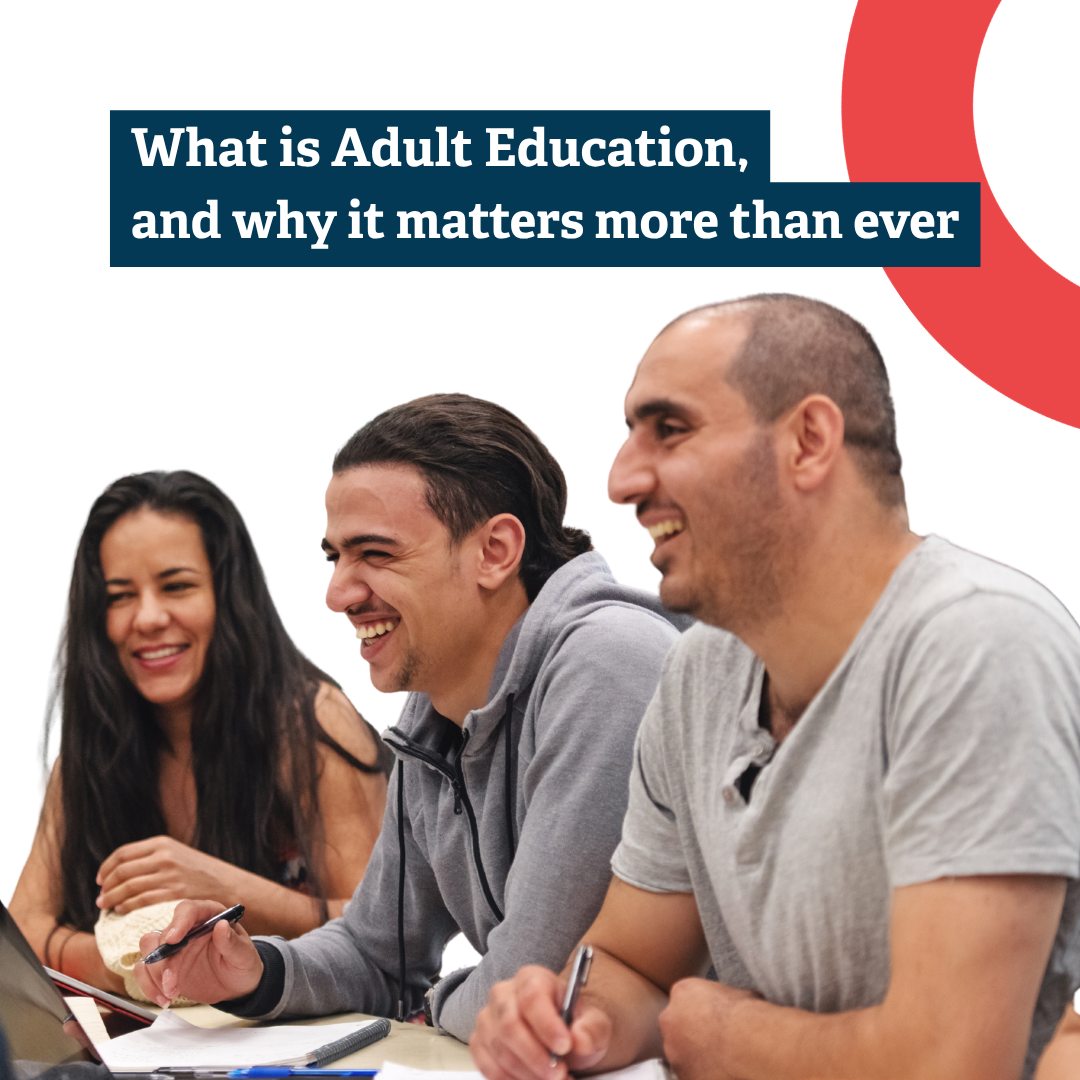
What Is Adult Education?
Adult education refers to any learning undertaken by individuals aged 19 and over, across formal, workplace, and community settings. This includes further education and vocational qualifications, Functional Skills in English and maths, workplace training, and professional development, as well as community and lifelong learning.
It is designed to be flexible and accessible, supporting learners to build skills, confidence, and recognised qualifications in ways that fit around their lives. Adult education and training help individuals develop vocational skills, gain recognised qualifications, and progress in employment or transition into new careers.
From our perspective, adult education is not just about education systems. It is about enabling mobility, inclusion, and opportunity. This spans apprenticeships, regulated and unregulated qualifications, Access to HE diplomas, and flexible learning pathways that support individuals at every stage of life.
A Labour Market That Is Becoming Harder to Navigate
The latest data from the Learning and Work Institute paints a picture of a labour market that is holding steady but becoming increasingly competitive. Employment levels have remained broadly stable over the past year, while vacancies have continued to decline, tightening the overall jobs market. At the same time, movement between roles has slowed, with job-to-job transitions now lower than pre-pandemic levels, and many sectors adapting to shifting demand and workforce needs.
Alongside this, the number of young people not in employment or full-time education remains high. Around 1.3 million young people are currently outside the system, and many are not engaging with structured support. The recent Milburn Review into youth employment highlights the scale of this challenge, pointing to gaps in access, coordination, and long-term support for those most at risk of being left behind.
Taken together, this is not simply an economic issue. It is a question of skills, access, and opportunity.
Why Adult Education Matters More Than Ever
In a more competitive labour market, skills and qualifications become critical to helping individuals access and progress in the workplace. Adult education creates opportunity by enabling people to stand out, whether they are entering the workforce, returning after a break, or seeking to move into a new role or sector. For many, it provides a practical route to progression that might otherwise feel out of reach.
It also plays an essential role in supporting career transitions. As sectors continue to evolve, individuals need the ability to adapt, build new skills, and respond to changing employer expectations. Adult education supports this by offering recognised qualifications and training that reflect real workforce demands, helping learners move into areas of growth and future opportunity.
Adult education also plays a critical role in developing vocational and technical skills that remain essential in a changing economy. As technology and artificial intelligence continue to reshape the labour market, there is growing recognition that many hands-on, people-focused professions, such as arboriculture, healthcare, and care services, will remain in high demand. These roles rely on practical expertise, judgement, and human interaction, skills that cannot easily be replicated. By supporting access to vocational training, apprenticeships, and sector-specific qualifications, adult education helps protect and strengthen these vital parts of the workforce while ensuring individuals are equipped for long-term, sustainable careers.
At the same time, adult education provides a vital pathway for those at risk of being left behind. Many individuals, particularly young people who are not engaged in employment or education, face barriers, including limited access to support and low levels of qualification. Flexible and accessible learning routes can help re-engage these learners, offering a way back into education, skills development, and employment.
In a labour market where fewer people are changing jobs, progression can feel less visible. Adult education helps unlock movement by giving individuals the tools to progress within their current roles, transition into new opportunities, and build long-term career resilience. It shifts progression from being dependent on vacancy alone to being driven by capability and learning.
Beyond employment outcomes, adult education also has a significant impact on confidence, well-being, and personal development. Returning to learning can be transformative, helping individuals build self-belief, regain direction, and open up new possibilities for the future.
A Sector with a Critical Role to Play
As an awarding organisations, Skills and Education Group Awards and BIIAB work closely with providers and employers to ensure that adult education delivers meaningful and relevant outcomes. This includes designing qualifications that are flexible and accessible, aligning learning with current and future workforce skills needs, and supporting progression at every level.
In a labour market that is steady but increasingly complex, this role is more important than ever. Ensuring that learning opportunities are both high quality and inclusive is essential to supporting individuals, addressing skills gaps, and strengthening the wider economy.
A Call to Action
The current labour market presents a picture of stability but also growing complexity and competition.
Without the right support, too many individuals risk being left behind, not for lack of potential but because of limited access to opportunity. As Emma Beal, CEO of Skills and Education Group, explains:
“In a labour market that is standing still, education is what allows people to move forward. Adult education is not just about skills. It is about opportunity, confidence, and creating pathways for those who might otherwise be excluded.”
This is why investment in adult education matters. It is not simply about addressing skills gaps. It is about ensuring the labour market works for everyone.
Conclusion
Adult education has always been important, but in today’s environment, it is essential.
It enables individuals to navigate economic change, supports employers to adapt, and helps address the UK’s growing skills needs through lifelong learning and workforce development. At Skills and Education Group and Skills and Education Group Awards, the focus is clear. It is to ensure every adult, regardless of background, has access to high-quality, relevant learning.
Because when opportunity becomes more competitive, learning is what keeps it within reach.
Contact us to learn how Adult Education can support your learners.
New to us: Contact our Business Growth Team
Existing Centres: Contact your Relationship Manager